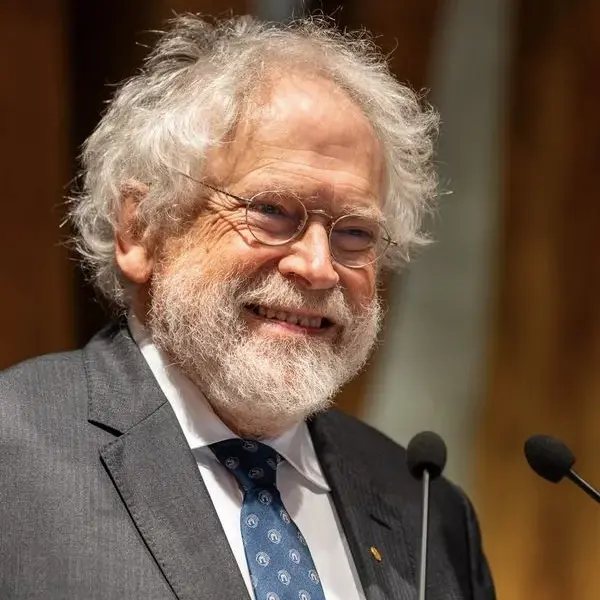
Anton Zeilinger
2022 Nobel Laureate in Physics | Inventor of Quantum Teleportation | Co-discoverer of GHZ Entanglement | Professor Emeritus, University of Vienna


Dieter Schwarz Associate Professor of AI & Work, Oxford | Director, Future of Work Programme | Author, How Progress Ends & The Technology Trap
Carl Benedikt Frey is Oxford's leading economist on AI, automation, and the future of work. Author of the most-cited study on job automation risk and the FT/Schroders shortlisted How Progress Ends, he advises the G20, OECD, and Fortune 500s. His talks give senior audiences a thousand years of evidence to navigate the AI era.
Want to book Carl Benedikt Frey as a speaker for your event? Please provide the info below and we’ll get in touch within 24h:
Carl Benedikt Frey is one of the most consequential economists working at the intersection of technology, labor markets, and long-run growth. As the Dieter Schwarz Associate Professor of AI & Work at the Oxford Internet Institute, Director of the Future of Work Programme at Oxford Martin School, and Fellow of Mansfield College, University of Oxford, he has built a body of research that shapes how governments, corporations, and institutions worldwide prepare for the economic consequences of artificial intelligence and automation.
Future of work speaker Carl Benedikt Frey first reached global prominence with a landmark 2013 study co-authored with Michael Osborne, “The Future of Employment: How Susceptible Are Jobs to Computerization?” — which estimated that 47% of U.S. jobs face significant automation risk. With over 12,000 academic citations, the paper’s methodology has been adopted by President Obama’s Council of Economic Advisers, the Bank of England, the World Bank, and the BBC’s widely used automation-risk tool. In 2024, Frey and Osborne revisited their findings in light of generative AI, concluding that face-to-face communication and genuinely original creativity remain distinctly human advantages.
His 2019 book The Technology Trap: Capital, Labor, and Power in the Age of Automation was selected as an FT Best Book of the Year and won Princeton University’s prestigious Richard A. Lester Award. Drawing on two centuries of economic history, it showed why technological disruption tends to be painful in the short run even when transformative in the long run — and why the politics of automation resistance are a rational, recurring response rather than an anomaly.
In 2025, Frey published How Progress Ends: Technology, Innovation, and the Fate of Nations (Princeton University Press), shortlisted for the Financial Times/Schroders Business Book of the Year Award. The book challenges the assumption that technological progress is inevitable, tracing a thousand years of innovation history across Song China, the Dutch Republic, Victorian Britain, and the modern U.S. and China. Its central argument — that decentralization fosters new technology exploration while bureaucratic coordination is needed to scale it, and that failure to balance these forces leads to stagnation — has profound implications for the AI era. Foreign Affairs called it a sweeping survey of a millennium of economic growth.
Frey has advised the G20, the OECD, the European Commission, the United Nations, and Fortune 500 companies. He has served on the World Economic Forum’s Global Future Council on the New Economic Agenda, the Bretton Woods Committee, and the OECD-hosted Global Partnership on Artificial Intelligence. His commentary appears regularly in the Financial Times, The Economist, Foreign Affairs, Scientific American, and the Wall Street Journal, and he is a frequent voice on CNN, BBC, and PBS NewsHour. IDEAS/RePEc ranks him among the top 5% of economists globally.
As a speaker, Carl Benedikt Frey brings a rare combination of deep historical perspective and empirical rigor to questions that sit at the top of every leadership agenda: how AI will reshape work and wages, which economies and organizations are best positioned to harness the next wave of technological change, and why the institutions that govern innovation matter as much as the technology itself. Senior audiences — from central bankers and finance ministers to Fortune 500 executives and investors — value his ability to move beyond speculation and ground bold predictions in a thousand years of evidence.
Drawing on his influential automation research and his latest book, Frey examines how AI is reshaping labor markets — which roles are genuinely at risk, which are more resilient than the headlines suggest, and why the distribution of AI's gains is ultimately a political and institutional question as much as a technological one. Audiences leave with a clear-eyed, evidence-based framework for understanding AI's economic impact and what organizations and governments can do to ensure they end up on the right side of the transition.
Why do some nations sustain technological leadership while others that once led the world eventually stagnate? Drawing on a thousand years of economic history, Frey reveals the recurring tension between decentralized innovation and bureaucratic coordination — and why getting that balance wrong has derailed progress from Song China to modern Japan. He applies these lessons to today's AI race, offering executives, investors, and policymakers a historically grounded map of where opportunity and risk actually lie.
Technological progress is almost always painful before it is beneficial — and the political backlash it generates is rational, not irrational. In this keynote, Frey draws on two centuries of industrial history to explain why disruption produces resistance, how organizations and governments can navigate transitions without triggering the kind of institutional paralysis that turns short-term pain into long-term stagnation, and what lessons the first and second industrial revolutions hold for managing the AI transition today.
As generative AI reshapes job roles across industries, the gap between hype and evidence has never been wider. Frey cuts through both the techno-optimism and the catastrophism to deliver a rigorous, data-driven assessment of which tasks and occupations are most exposed to AI substitution, which are likely to be augmented rather than replaced, and how organizations should be thinking about talent strategy, reskilling, and workforce planning in an environment of genuine uncertainty. Based on his ongoing research at Oxford and his 2024 update to the landmark automation study.
2022 Nobel Laureate in Physics | Inventor of Quantum Teleportation | Co-discoverer of GHZ Entanglement | Professor Emeritus, University of Vienna
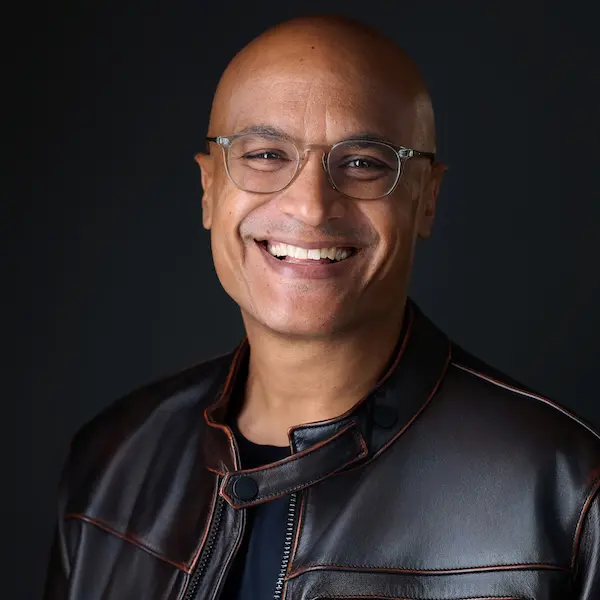
Global Tech Executive | Board Director | Former VP Global Partnerships, Xbox | Ex-Global Head of Gaming, YouTube | Ex-Google Play, Meta & Disney | Chair, Games for Change

AI Expert & Strategist | Former VP, Amazon Web Services | Google Executive | Former U.S. Under Secretary of Commerce | Founder & CEO, Obsidian Strategies

One of Football’s Greatest Goalkeepers; Legendary Real Madrid & Spain Captain; Inspirational Sports Leader


© 2026 Aurum Speakers Bureau. All Rights Reserved

| Basic Data Protection Information | |
|---|---|
| Data controller | AURUM SPEAKERS BUREAU S.L. |
| Address | Parc Audiovisual de Catalunya 1, Oficina S11, 08225 Terrassa, Spain |
| Purposes | We will use your data to respond to your requests and deliver our services to you. |
| Marketing | We will only send you marketing correspondence if you have given your prior consent, which you can do by ticking the box for that purpose. |
| Lawful basis | We will only process your data if you have given your prior consent, which you can do by ticking the box for that purpose. |
| Recipients | Generally, only our members of staff who have been duly authorised may access the data that you have provided. |
| Your Rights | You have the right to know what information we hold about you, to rectify it and to erase it, as explained in the additional information available on our website. |
| Additional Information | For more information, please see “PRIVACY POLICY” on our website. |