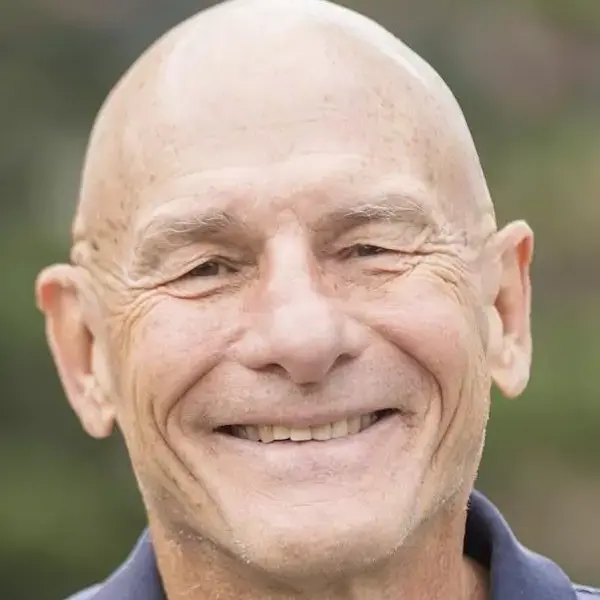
David Patterson
ACM Turing Award Laureate | Pioneer of RISC & RAID | Distinguished Engineer, Google DeepMind | Pardee Professor Emeritus, UC Berkeley

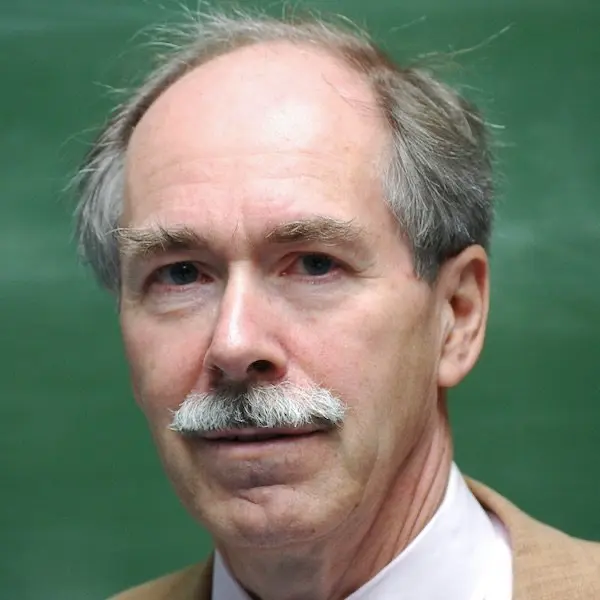
1999 Nobel Laureate in Physics | Distinguished Professor Emeritus, Utrecht University | Pioneer of the Holographic Principle | Expert on Quantum Gravity & Black Holes
Gerard 't Hooft built the mathematical foundation of the Standard Model of particle physics, pioneered the holographic principle, and has spent decades challenging the deepest assumptions of quantum mechanics. A 1999 Nobel Laureate and Distinguished Professor Emeritus at Utrecht University, he brings five decades of frontier physics to the stage — along with the rare courage to question what most scientists take for granted.
Want to book Gerard ‘t Hooft as a speaker for your event? Please provide the info below and we’ll get in touch within 24h:
Gerard ‘t Hooft is one of the most consequential theoretical physicists alive, a Nobel laureate whose work in the early 1970s provided the mathematical foundation that made the modern Standard Model of particle physics possible. A Distinguished Professor Emeritus at Utrecht University in the Netherlands, speaker Gerard ‘t Hooft comes from one of the most remarkable scientific families in modern history: his great-uncle was Frits Zernike, winner of the 1953 Nobel Prize in Physics, and his uncle Nico van Kampen was a celebrated professor of theoretical physics at Utrecht.
Nobel Prize speaker Gerard ‘t Hooft shared the 1999 Nobel Prize in Physics with his thesis advisor Martinus Veltman “for elucidating the quantum structure of electroweak interactions.” The prize recognized work ‘t Hooft had done as a graduate student in the early 1970s that transformed theoretical physics: he proved that gauge theories, the mathematical framework underlying three of nature’s four fundamental forces, are renormalizable, meaning they can produce finite, physically meaningful predictions rather than diverging to infinity. This result, combined with the technique of dimensional regularization he developed with Veltman, gave physicists for the first time the computational tools to make precise predictions about subatomic particles, enabling the later discovery of the W and Z bosons and the top quark.
His contributions extend far beyond the Nobel-winning work. ‘t Hooft is one of the originators of the holographic principle, the profound and still-debated idea that all the information contained within a volume of space can be encoded on its boundary surface, a concept that has become central to modern approaches to quantum gravity and string theory. He has made foundational contributions to the understanding of black holes, quantum field theory, and instantons, and has spent decades developing a provocative alternative to standard quantum mechanics: the Cellular Automaton Interpretation, which proposes that the apparent randomness of quantum phenomena conceals a deeper, deterministic reality.
‘t Hooft’s intellectual courage extends to challenging orthodoxies that most physicists accept without question. In lectures and publications, including a widely discussed feature in Scientific American and interviews questioning the foundations of quantum theory, he argues that the strangeness we attribute to quantum mechanics may reflect our incomplete understanding of an underlying classical reality, not a fundamental feature of nature itself. This position, held by a Nobel laureate with deep technical mastery, commands attention from physicists and philosophers of science worldwide.
Beyond his research, ‘t Hooft has received the Special Breakthrough Prize in Fundamental Physics, honoring a lifetime of profound contributions to the field, along with the Wolf Prize, the Lorentz Medal, and the Netherlands’ Spinozapremie, its highest scientific honor. He is a Commander of the Order of the Netherlands Lion, an Officer of the French Legion of Honor, and a member of the leading scientific academies of France, the United Kingdom, and the United States. Asteroid 9491 was named in his honor.
As a speaker, Gerard ‘t Hooft brings the authority of a Nobel laureate who has spent more than five decades at the frontier of fundamental physics to questions that fascinate expert and general audiences alike: the nature of reality, the meaning of quantum mechanics, the physics of black holes, the search for a unified theory of everything, and why inspiring the next generation of scientists matters as much as any equation. His talks are rare combinations of intellectual depth and genuine wonder.
Quantum mechanics is the most successful scientific theory ever devised — and one of the most philosophically unsettling. In this keynote, 't Hooft presents his provocative, Nobel-backed case that the apparent randomness and observer-dependence of quantum phenomena may conceal a deeper, deterministic layer of reality. Drawing on his Cellular Automaton Interpretation and decades of foundational research, he invites audiences to question assumptions that most physicists have accepted since the 1920s, and explores what a more complete theory of quantum reality might look like. A rare opportunity to hear a Nobel laureate argue, with full technical authority, that the standard story may not be the final one.
Black holes are not just exotic objects at the edge of the cosmos — they are laboratories for the most fundamental questions in physics. In this keynote, 't Hooft explores what black holes reveal about the relationship between quantum mechanics and gravity, the surprising implications of Hawking radiation, and the holographic principle: the idea that the information content of any region of space is fully encoded on its boundary. He shares his own contributions to these ideas and what they suggest about the ultimate structure of reality — including the startling possibility that our universe may have a parallel counterpart on the other side of every black hole horizon.
The Standard Model of particle physics is the most precisely tested scientific theory in history — and 't Hooft's Nobel-winning work was essential to making it possible. In this keynote, he tells the story of how physicists pieced together a unified description of matter and forces from almost nothing, what the model reveals about the deep structure of reality, where it breaks down, and what the unresolved questions tell us about the next revolution in physics. Accessible to non-specialist audiences, this talk conveys the extraordinary intellectual achievement of twentieth-century physics and the open frontiers that remain.
Great science does not happen without great scientists — and great scientists begin as curious children. In this keynote, 't Hooft reflects on his own journey from a scientifically rich family in the Netherlands to the Nobel Prize, and makes a passionate case for why cultivating genuine scientific curiosity is one of the most important investments any society can make. Drawing on a lifetime of teaching, mentoring, and public engagement, he explores what draws young minds to physics, what obstacles they face, and what educators, institutions, and leaders can do to ensure that the next generation of discoverers gets the chance to change the world.
ACM Turing Award Laureate | Pioneer of RISC & RAID | Distinguished Engineer, Google DeepMind | Pardee Professor Emeritus, UC Berkeley

2017 Nobel Laureate in Physics | Co-Founder of LIGO | Feynman Professor Emeritus, Caltech | Science Advisor, Interstellar

Nobel Prize Winner in Economics 2010 | Regius Professor at LSE | Co-Chair, Institute for the Future of Work | Authority on AI, Labor Markets & Productivity

Bestselling Author of The End of History | Olivier Nomellini Senior Fellow, Stanford FSI | Political Scientist on Democracy, Identity & Global Affairs


© 2026 Aurum Speakers Bureau. All Rights Reserved

| Basic Data Protection Information | |
|---|---|
| Data controller | AURUM SPEAKERS BUREAU S.L. |
| Address | Parc Audiovisual de Catalunya 1, Oficina S11, 08225 Terrassa, Spain |
| Purposes | We will use your data to respond to your requests and deliver our services to you. |
| Marketing | We will only send you marketing correspondence if you have given your prior consent, which you can do by ticking the box for that purpose. |
| Lawful basis | We will only process your data if you have given your prior consent, which you can do by ticking the box for that purpose. |
| Recipients | Generally, only our members of staff who have been duly authorised may access the data that you have provided. |
| Your Rights | You have the right to know what information we hold about you, to rectify it and to erase it, as explained in the additional information available on our website. |
| Additional Information | For more information, please see our "PRIVACY POLICY". |