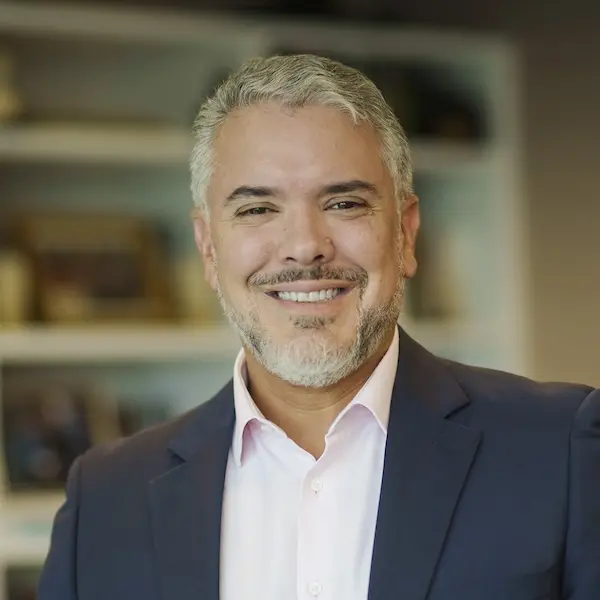
Iván Duque
President of Colombia (2018–2022) | Distinguished Fellow, Woodrow Wilson Center | Creator of the 'Orange Economy' | Global Voice on Sustainability & Democracy



2018 Nobel Laureate in Chemistry | Inventor of Humanized & Human Therapeutic Antibodies | Co-Founder, Bicycle Therapeutics | Fellow of the Royal Society | Copley Medal 2024
Sir Gregory Winter is the scientist whose inventions underpin virtually every major antibody drug on the market — from Herceptin and Avastin to Humira, the world's best-selling medicine. His 2018 Nobel Prize in Chemistry recognized a body of work that has saved millions of lives and generated hundreds of billions in pharmaceutical value. He is also a serial biotech founder whose companies have been acquired by AstraZeneca and GSK.
Want to book Gregory Winter as a speaker for your event? Please provide the info below and we’ll get in touch within 24h:
Sir Gregory Winter is one of the most consequential scientists in the history of modern medicine — a British molecular biologist whose inventions in antibody engineering underpin virtually every major therapeutic antibody on the market today. He is a Fellow of Trinity College, Cambridge, a Fellow of the Royal Society, and the recipient of the 2024 Copley Medal — the Royal Society’s most prestigious award, first granted in 1731 — in recognition of a career that has irreversibly changed how humanity treats cancer, autoimmune disease, and inflammatory conditions. He was knighted in 2004 for services to science.
Nobel Prize speaker Sir Gregory Winter shared the 2018 Nobel Prize in Chemistry with George P. Smith and Frances Arnold for his work on the phage display of peptides and antibodies. His contributions to the prize represent two distinct and commercially transformative inventions. The first, developed in 1986, was the technique for humanizing rodent antibodies — replacing the mouse-derived portions of monoclonal antibodies with human sequences so that the immune system would not reject them, making the entire class of antibody therapeutics viable in human patients. The second was his development, beginning in 1989, of methods to generate fully human antibodies using phage display libraries — eliminating the need for animal-derived starting materials altogether and enabling the development of therapeutic antibodies against human self-antigens that would otherwise trigger anti-mouse immune reactions.
The clinical and commercial consequences of these inventions are extraordinary. Winter’s humanization techniques enabled the development of alemtuzumab (Campath-1H), trastuzumab (Herceptin), bevacizumab (Avastin), palivizumab (Synagis), and pembrolizumab (Keytruda) — collectively representing some of the most widely used and economically significant medicines in oncology, immunology, and virology. His fully human antibody platform, developed through Cambridge Antibody Technology, led directly to adalimumab — marketed as Humira — the first fully human monoclonal antibody approved by the FDA and, for over a decade, the best-selling drug in pharmaceutical history.
Winter’s scientific career has been matched by an equally remarkable entrepreneurial one. He co-founded Cambridge Antibody Technology in 1989 — floated on the London Stock Exchange in 1997 and acquired by AstraZeneca in 2006 for £702 million. He founded Domantis in 2000 to pioneer domain antibody therapeutics, acquired by GlaxoSmithKline in 2006. And in 2009, he co-founded Bicycle Therapeutics, a NASDAQ-listed clinical-stage company developing bicyclic peptide conjugates as targeted cancer therapies. Bicycle raised $555 million in a 2024 equity financing, bringing its balance sheet to approximately $1 billion — a reflection of the continued scientific and commercial credibility of Winter’s foundational work. He has also served on the boards of bit.bio and advised biotech venture funds.
As a speaker, Sir Gregory Winter offers a perspective that is almost impossible to replicate: that of a foundational inventor whose work has been embedded in hundreds of billions of dollars of medicines used by millions of patients, combined with the reflective wisdom of a scientist-entrepreneur who has spent forty years bridging the gap between academic discovery and clinical application. His talks are equally compelling for pharmaceutical executives, biotech investors, academic researchers, and innovation leaders seeking to understand how science translates into transformative real-world impact.
In the early 1980s, the idea of using antibodies as precision medicines was compelling but practically blocked — mouse-derived antibodies triggered immune rejection in human patients, limiting their clinical utility. Winter's solution — genetic engineering to humanize the antibodies, and later to make them fully human — opened a therapeutic frontier that has since yielded dozens of blockbuster drugs and reshaped oncology, immunology, and virology. In this keynote, Winter tells the story from the inside: the scientific reasoning, the patent battles, the company-building, and the Nobel recognition — and reflects on what it means for a single series of laboratory insights to generate medicines that reach hundreds of millions of patients. Essential listening for pharmaceutical, biotech, healthcare, and innovation audiences.
The central insight of Winter's Nobel Prize-winning work is that evolution — the process that generated all of life's molecular diversity — can be harnessed, directed, and accelerated in the laboratory to produce proteins with precisely targeted therapeutic functions. In this keynote, he explains the principles behind phage display and directed evolution, how they were applied to antibody engineering, and what they continue to enable as AI-assisted protein design and synthetic biology expand the drug discovery toolkit. A scientifically rigorous and conceptually compelling keynote for life sciences, research, and innovation audiences who want to understand the platform that underpins modern biologic medicines.
For four decades, Sir Gregory Winter has navigated a dual career as a research scientist at Cambridge and a serial biotech entrepreneur whose companies have been acquired by two of the world's largest pharmaceutical companies. In this keynote, he reflects on the architecture of that journey: why he founded companies not to make money but to see his inventions used in patients; what the key decisions were at each stage; how to manage the tension between academic freedom and commercial urgency; and what the Cambridge model of technology translation — from the MRC Laboratory of Molecular Biology to a global industry worth hundreds of billions — reveals about the conditions that make science-to-medicine translation possible. A thoughtful, candid, and genuinely inspiring keynote for research institutions, innovation leaders, and biotech investors.
Humira and Herceptin were the first generation. The next generation of precision medicines — including bicyclic peptides, antibody-drug conjugates, and AI-designed proteins — represents a new wave of therapeutic opportunity that is only beginning to emerge. Winter draws on his current work with Bicycle Therapeutics and his involvement in cutting-edge cell therapy companies to map what he believes the next decade will yield: which platform technologies are most promising, where AI is genuinely accelerating discovery rather than overpromising, and what clinical and commercial milestones will define the leaders from the followers. A forward-looking, credibility-rich keynote for pharmaceutical, biotech, and investor audiences who want to understand the next era of precision medicine from one of its founding architects.
President of Colombia (2018–2022) | Distinguished Fellow, Woodrow Wilson Center | Creator of the 'Orange Economy' | Global Voice on Sustainability & Democracy

Creator of The Goal Digger Podcast (115M+ Downloads) | New York Times Best-Selling Author of How Are You, Really? | Digital Marketing Educator
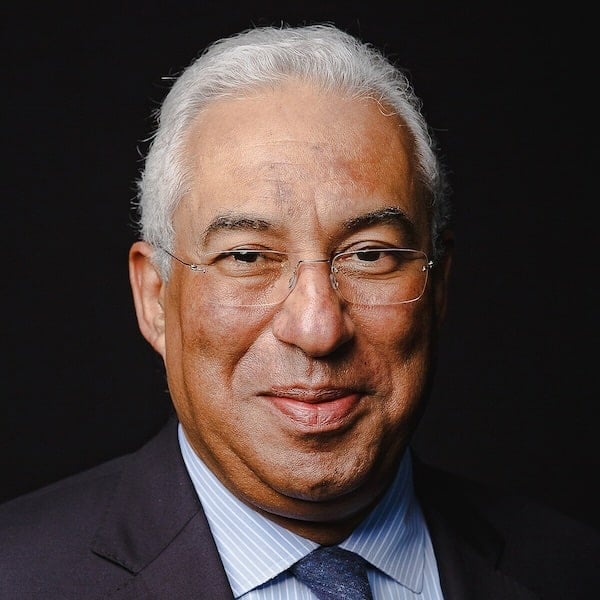
President of the European Council | Former Prime Minister of Portugal (2015-2024) | Former Mayor of Lisbon | Expert on EU Strategy, Geopolitics & Sustainability

2x NBA Champion | Basketball Operations Consultant, Golden State Warriors | Founder, Zaza Pachulia Basketball Academy | Angel Investor & Entrepreneur


© 2026 Aurum Speakers Bureau. All Rights Reserved

| Basic Data Protection Information | |
|---|---|
| Data controller | AURUM SPEAKERS BUREAU S.L. |
| Address | Parc Audiovisual de Catalunya 1, Oficina S11, 08225 Terrassa, Spain |
| Purposes | We will use your data to respond to your requests and deliver our services to you. |
| Marketing | We will only send you marketing correspondence if you have given your prior consent, which you can do by ticking the box for that purpose. |
| Lawful basis | We will only process your data if you have given your prior consent, which you can do by ticking the box for that purpose. |
| Recipients | Generally, only our members of staff who have been duly authorised may access the data that you have provided. |
| Your Rights | You have the right to know what information we hold about you, to rectify it and to erase it, as explained in the additional information available on our website. |
| Additional Information | For more information, please see “PRIVACY POLICY” on our website. |