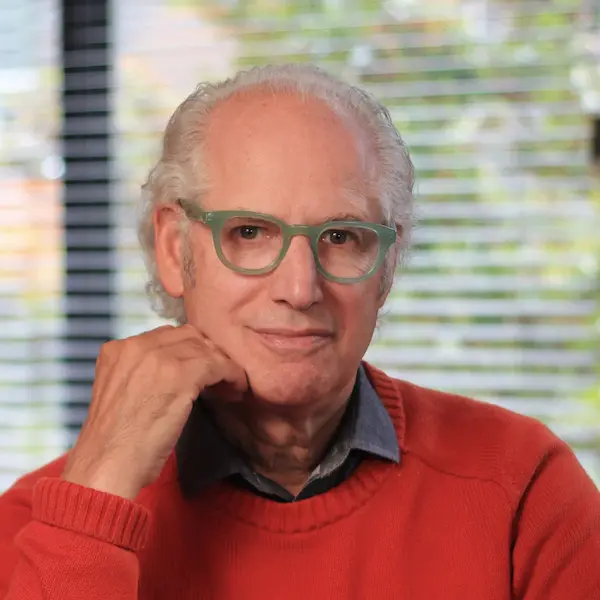
Zev Siegl
Co-Founder of Starbucks | Serial Entrepreneur | Startup Mentor & Business Consultant | Keynote Speaker



Nobel Peace Prize Laureate, 2021 | Co-Founder & CEO, Rappler | Professor of Practice, Columbia SIPA | Time Person of the Year, 2018
Maria Ressa won the Nobel Peace Prize not for past achievement but for active, ongoing journalism under conditions of extraordinary personal risk. As CEO of Rappler, she faced 23 government-filed legal cases designed to silence her newsroom and kept publishing throughout. Today she is the world's most forensically precise voice on how disinformation, Big Tech, and algorithmic manipulation are dismantling democracy, and what can still be done about it.
Want to book Maria Ressa as a speaker for your event? Please provide the info below and we’ll get in touch within 24h:
Maria Ressa is a Nobel Peace Prize laureate, veteran investigative journalist, and one of the most urgent voices alive today on the twin crises threatening democracy: the collapse of the information ecosystem and the unchecked power of technology platforms. Born in Manila and raised in New Jersey, she graduated from Princeton University and returned to the Philippines, where she spent nearly two decades as CNN’s lead investigative reporter in Southeast Asia before co-founding Rappler in 2012. She serves as Rappler’s CEO and leads it as the preeminent independent digital news organization in the Philippines. She was named Time magazine’s Person of the Year in 2018, one of its 100 Most Influential People of 2019, and one of the Most Influential Women of the Century.
Media speaker Maria Ressa was awarded the Nobel Peace Prize in 2021, jointly with Russian journalist Dmitry Muratov, in recognition of her efforts to safeguard freedom of expression as a precondition for democracy and lasting peace. The Nobel Committee cited her decade of work exposing state violence, disinformation campaigns, and the systematic use of social media to suppress dissent under former Philippine President Rodrigo Duterte. That work came at extraordinary personal cost: the Duterte administration filed 23 separate legal cases against Ressa and Rappler, at one point leaving her facing a cumulative potential sentence of more than 100 years in prison. By June 2025, 22 of those 23 cases had been dismissed or resulted in acquittal, including the anti-dummy case and all tax charges. One cyberlibel conviction, widely condemned by the UN and international press freedom organizations as politically motivated, remains under final appeal before the Philippine Supreme Court, where the country’s solicitor general has recommended acquittal.
Since her Nobel Prize, Ressa has become the world’s most prominent analyst of what she calls the “information ecosystem collapse”: the process through which social media algorithms, surveillance capitalism, and the weaponization of data have shattered shared reality, polarized societies, and enabled the rise of authoritarianism globally. She co-founded The Nerve, a data forensics company affiliated with Rappler that monitors information ecosystem threats in real time. She delivered the Harvard commencement address in 2024, receiving an honorary degree from the university. Since 2023 she has been a distinguished fellow and professor of professional practice at Columbia University’s School of International and Public Affairs, where she leads projects on AI and democracy.
As a media speaker, Maria Ressa brings what no academic or policy expert can replicate: the first-person testimony of someone who built an independent newsroom, faced down a government that tried to destroy it through every available legal instrument, and kept publishing throughout. Her keynotes are simultaneously a diagnosis of the structural failures threatening press freedom and democracy, a forensic analysis of how disinformation operates at scale, and a call to action for the institutions, corporations, and individuals who still have the power to hold the line.
Based on her Nobel Prize-winning work and her book of the same title, this keynote draws directly from Ressa's experience building and defending Rappler against a sustained government campaign of legal harassment, online attacks, and institutional intimidation. She examines what it takes to maintain institutional integrity under extreme pressure, why facts are the first casualty of authoritarian consolidation, and what leaders in any sector can learn from the discipline, courage, and organizational culture required to hold the line when the stakes are genuinely high.
An atom bomb exploded in our information ecosystem, and we have not yet reckoned with the damage. Drawing from her decade of data-driven analysis of social media platforms through Rappler and The Nerve, Ressa maps how algorithmic amplification of anger, microtargeting of deceptive content, and the deliberate destruction of shared reality have fractured democratic societies around the world. She identifies the specific design choices and business model incentives responsible for those outcomes and outlines what regulatory, corporate, and individual action is still capable of reversing the damage.
Generative AI has made disinformation faster, cheaper, and harder to detect. Deepfakes undermine visual evidence. LLM chatbots blur the line between human and automated content. And the layoffs devastating trust and safety teams at major platforms have removed much of the remaining infrastructure for accountability. In this keynote, Ressa examines the implications of AI for journalism, democracy, and institutional credibility, drawing from her experience deploying AI responsibly at Rappler and her research at Columbia University's Institute of Global Politics. A keynote for technology, media, and corporate audiences grappling seriously with AI governance.
Democracies are not killed overnight. They are dismantled incrementally, through the capture of courts, the erosion of media independence, the normalization of disinformation, and the gradual withdrawal of the institutions that once enforced accountability. Ressa's experience in the Philippines, combined with her global research on information ecosystems, gives her a precise diagnostic framework for identifying where democratic erosion is occurring and what institutional responses are still capable of arresting it. A keynote for boards, policy audiences, and leadership teams that take seriously their role as stewards of democratic norms and practices.
Co-Founder of Starbucks | Serial Entrepreneur | Startup Mentor & Business Consultant | Keynote Speaker
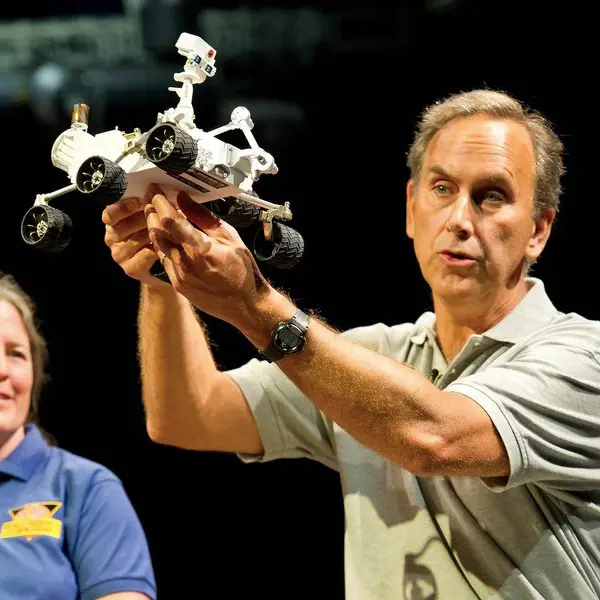
Harold Brown Professor of Geology, Caltech | Chief Scientist, NASA Curiosity Rover | Member, National Academy of Sciences

Australian Company Director & Leadership Expert | Author of Head & Heart & Blindspotting | Thinkers50 Leadership Award Winner | On Modern, Head & Heart Leadership
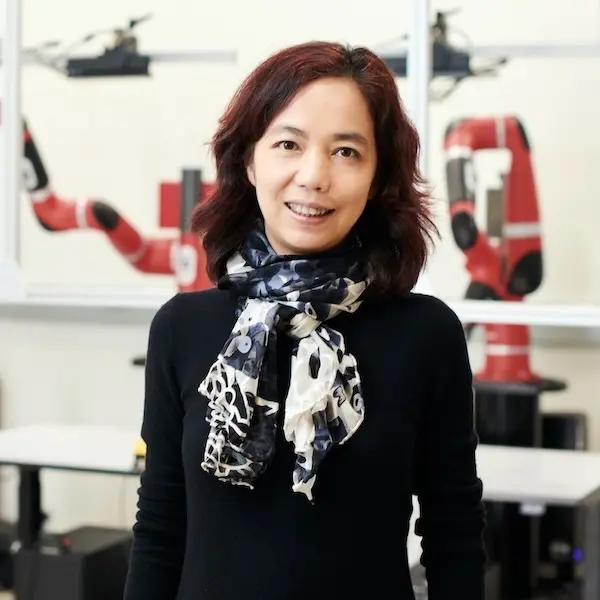
"Godmother of AI" | Creator of ImageNet | Co-Founder & CEO, World Labs | Sequoia Professor, Stanford University | Co-Director, Stanford HAI


© 2026 Aurum Speakers Bureau. All Rights Reserved

| Basic Data Protection Information | |
|---|---|
| Data controller | AURUM SPEAKERS BUREAU S.L. |
| Address | Parc Audiovisual de Catalunya 1, Oficina S11, 08225 Terrassa, Spain |
| Purposes | We will use your data to respond to your requests and deliver our services to you. |
| Marketing | We will only send you marketing correspondence if you have given your prior consent, which you can do by ticking the box for that purpose. |
| Lawful basis | We will only process your data if you have given your prior consent, which you can do by ticking the box for that purpose. |
| Recipients | Generally, only our members of staff who have been duly authorised may access the data that you have provided. |
| Your Rights | You have the right to know what information we hold about you, to rectify it and to erase it, as explained in the additional information available on our website. |
| Additional Information | For more information, please see “PRIVACY POLICY” on our website. |