
Chris Skinner
Bestselling Author of Digital Bank & Intelligent Money | Chair, The Financial Services Club | CEO, Finanser Ltd | Fintech Thought Leader


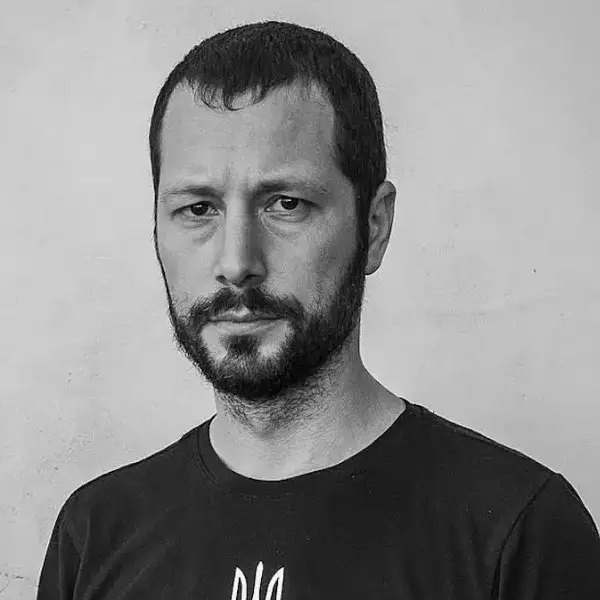
Academy Award Winner, Best Documentary (2024) | BAFTA Winner | Pulitzer Prize Winner | Director, 20 Days in Mariupol & 2000 Meters to Andriivka | 2x Sundance | AP
Mstyslav Chernov is the Ukrainian filmmaker and Associated Press journalist who became the last international reporter to document Mariupol under Russian siege in 2022. His film 20 Days in Mariupol won Ukraine its first Academy Award and a BAFTA in 2024. His second film, 2000 Meters to Andriivka, won Best Directing at Sundance 2025. A Pulitzer Prize winner, he speaks on journalism, truth, war, and the moral cost of bearing witness.
Want to book Mstyslav Chernov as a speaker for your event? Please provide the info below and we’ll get in touch within 24h:
Mstyslav Chernov is a Ukrainian filmmaker and video journalist for the Associated Press whose work has defined how the world has seen the Russia-Ukraine war. In February 2022, as Russian forces encircled and besieged Mariupol, he and his AP colleagues Evgeniy Maloletka and Vasilisa Stepanenko became the last international journalists reporting from inside the city. Over 20 days, they documented what Russian troops were doing to the civilian population: the bombing of a maternity hospital, dying children, mass graves. They escaped with 30 hours of footage that became the evidentiary record of the siege. Chernov’s account of those days has since been described by The Guardian as “a brave, visceral, merciless masterpiece” and by The New York Times as “essential.”
As a geopolitics speaker, Chernov’s film 20 Days in Mariupol, produced with FRONTLINE and the Associated Press and directed by Chernov, won the Academy Award for Best Documentary Feature at the 96th Academy Awards in March 2024. It was Ukraine’s first-ever Oscar. The same film won the BAFTA Award for Best Documentary in February 2024. Accepting the Oscar, Chernov told the ceremony: “Probably I would be the first director on this stage who will say I wish I would never have made this film. I wish to be able to exchange this to Russia never attacking Ukraine, never occupying our cities.” He closed his speech with “Slava Ukraini!” and urged the audience to ensure “the history record is set straight, and that truth will prevail.”
Chernov is a Pulitzer Prize-winning journalist with nearly a decade of international conflict reporting for the Associated Press, covering Syria, Gaza, and Afghanistan in addition to Ukraine. He has covered the Russia-Ukraine war since Russia’s initial incursion in 2014. His commitment to documenting Ukraine’s experience of Russian aggression is not a career decision but a biographical one: as he told Reporters Without Borders, “I always came back to Ukraine, my homeland, to document the reality of the Russian invasion.”
Chernov’s second documentary feature, 2000 Meters to Andriivka, premiered at the 2025 Sundance Film Festival in the World Cinema Documentary Competition. At Sundance, Chernov received the best directing award in the World Documentary program. The film covers the Ukrainian army’s battles in the east of the country and was selected by Ukraine as its submission for the Academy Awards. Variety’s reviewer wrote that the film is “a documentary both vigorous and exhausted, propulsive and petrified, with a prevailing tone of anxious fatigue.”
As a speaker, Mstyslav Chernov addresses questions that have become increasingly urgent in an era of information warfare, media suppression, and the weaponization of narrative: what it means to bear witness when witness itself is under assault, what journalism requires when the cost of the work is death, and what it means for democratic societies when the documentary record of atrocity exists but the political will to act on it does not. He speaks not from theory but from lived experience in the most contested information environments of our time. Contact Aurum Speakers Bureau to book Mstyslav Chernov for your next event.
Chernov's foundational keynote presents the story of the Mariupol siege from the inside: the decisions his team made to stay when they could have left, the ethical weight of documenting atrocity in real time, the moment when the footage they were taking became the primary evidence of war crimes being committed, and the responsibility that came with knowing that their images might be the only record of what was happening to a city that was being systematically destroyed. He examines what it means to be a journalist in conditions where journalism itself is a military target, and what the existence of the documentary record — and its relationship to actual political accountability — reveals about the gap between truth and action in the current geopolitical moment.
Russia's war against Ukraine has been fought simultaneously on the ground and in the information space. Chernov, who has documented both fronts across nearly a decade of conflict reporting, presents a practitioner's account of what information warfare looks like from inside a conflict zone: how propaganda operates, how it is countered, why documentary evidence is simultaneously more important and more contested than ever, and what the spread of synthetic media and AI-generated content means for the future of the kind of journalism he has spent his career practicing. A keynote for media, policy, technology, and corporate audiences grappling with the consequences of a world in which the distinction between true and false has become a contested political question rather than an empirical one.
Chernov has spent nearly a decade reporting from the most dangerous places on earth — Syria, Gaza, Afghanistan, and Ukraine under Russian invasion. In this keynote he examines what that work actually requires: not just physical courage, but the specific ethical, emotional, and professional disciplines that allow a journalist to remain effective and honest in conditions of extreme stress, institutional pressure, and personal danger. He speaks about the decision to stay in Mariupol when evacuation was possible, what it means to film suffering rather than alleviate it, and the psychological weight of carrying images that most people cannot bear to look at. A keynote for audiences in media, public service, crisis response, and any organization whose people are required to function effectively in high-stakes and adversarial conditions.
Chernov's Oscar acceptance speech concluded with the words "cinema forms memories, and memories form history." In this keynote he develops that argument: examining how documentary film has functioned as an instrument of historical record and political accountability, why the visual record of atrocity carries a different moral weight than written testimony, and what it means that 20 Days in Mariupol exists as a permanent record of what happened to Mariupol's civilian population while the geopolitical response to those events remains contested. He examines the relationship between documentary evidence and international justice, and what the history of conflict documentation — from the Nuremberg trials to the present — reveals about when images produce accountability and when they do not. A keynote for audiences in law, media, human rights, cultural institutions, and international affairs.
Bestselling Author of Digital Bank & Intelligent Money | Chair, The Financial Services Club | CEO, Finanser Ltd | Fintech Thought Leader
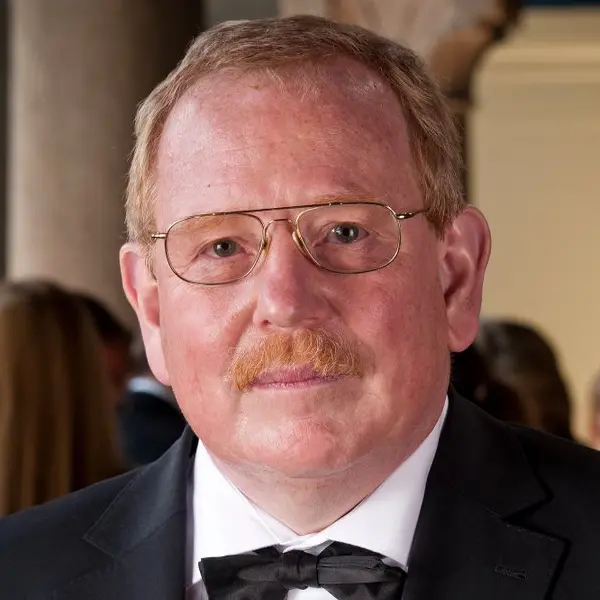
2020 Nobel Laureate in Physics | Director, Max Planck Institute for Extraterrestrial Physics | UC Berkeley Professor | Black Holes, Galactic Nuclei & Infrared Astronomy

AI & Innovation Authority | Kellogg Professor & Author of Return on AI | Pioneer in AI Executive Education | 35,000+ Executives Trained

Scientific Director, IDSIA | AI Director & Professor, KAUST | Father of Generative AI | Pioneer of LSTM & Deep Learning


© 2026 Aurum Speakers Bureau. All Rights Reserved

| Basic Data Protection Information | |
|---|---|
| Data controller | AURUM SPEAKERS BUREAU S.L. |
| Address | Parc Audiovisual de Catalunya 1, Oficina S11, 08225 Terrassa, Spain |
| Purposes | We will use your data to respond to your requests and deliver our services to you. |
| Marketing | We will only send you marketing correspondence if you have given your prior consent, which you can do by ticking the box for that purpose. |
| Lawful basis | We will only process your data if you have given your prior consent, which you can do by ticking the box for that purpose. |
| Recipients | Generally, only our members of staff who have been duly authorised may access the data that you have provided. |
| Your Rights | You have the right to know what information we hold about you, to rectify it and to erase it, as explained in the additional information available on our website. |
| Additional Information | For more information, please see “PRIVACY POLICY” on our website. |