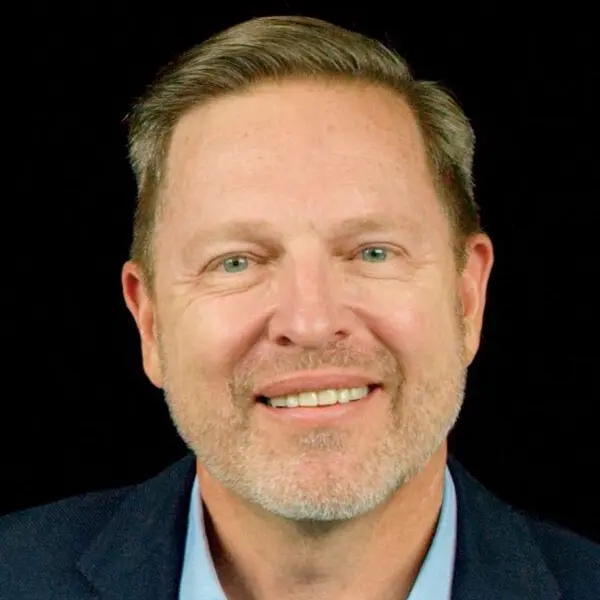
Verne Harnish
Founder & CEO, Scaling Up | Bestselling Author: Scaling Up (Rockefeller Habits 2.0) | Creator of Rockefeller Habits Framework | Founder, Entrepreneurs' Organization



Creator of Wait But Why | Bestselling Author of What's Our Problem | TED Speaker, 75M+ Views | AI, Procrastination & Civilizational Thinking
Tim Urban built one of the internet's most beloved intellectual franchises — Wait But Why — and delivered a TED Talk seen by 75 million people. His 2023 book What's Our Problem? reframes why societies and institutions break down. Audiences leave his talks with new mental models on procrastination, AI, and polarization that actually change how they lead.
Want to book Tim Urban as a speaker for your event? Please provide the info below and we’ll get in touch within 24h:
Tim Urban is one of the most original thinkers of the digital age — a writer, illustrator, and public intellectual whose long-form essays on human nature, technology, and civilizational risk have built a global audience of millions. He is the creator of Wait But Why, the wildly popular blog known for making the most complex and consequential ideas of our time — from artificial intelligence and the Fermi Paradox to procrastination and tribal psychology — accessible, entertaining, and unforgettable. Bill Gates has called Urban one of his favorite writers, and Elon Musk commissioned him to write the definitive long-form introduction to SpaceX and Neuralink, bringing Urban’s work to tens of millions of new readers.
As a TED speaker, Tim Urban delivered one of the platform’s most-watched talks of all time — “Inside the Mind of a Master Procrastinator” — which has accumulated over 75 million views and transformed the public conversation around focus, motivation, and self-sabotage. The talk is consistently cited by executives, educators, and coaches as a breakthrough framing that resonates long after the event.
His 2023 book What’s Our Problem? A Self-Help Book for Societies is a sweeping diagnosis of why modern democratic societies are becoming increasingly dysfunctional — and what that means for leadership, institutions, and collective decision-making. Drawing on years of research and Urban’s signature hand-drawn storytelling style, the book offers a framework for understanding political and organizational polarization that has been embraced by leaders across sectors.
Urban’s scope has expanded steadily from the personal and behavioral to the political and existential. He has written extensively on artificial intelligence — including a landmark multi-part series on superintelligence and its implications — placing him among the most widely read popular voices on AI risk well before the topic entered mainstream corporate discourse. His work sits at the intersection of behavioral science, philosophy, political theory, and futurism, making him unusually valuable to audiences grappling with any of those domains.
As a speaker, Tim Urban is unlike most on the circuit. His talks combine hand-drawn visuals, deep intellectual rigor, and a disarming humor that makes even the most challenging ideas feel approachable and energizing. Audiences leave not just entertained but genuinely reoriented — with new mental models for thinking about procrastination, technology, polarization, and the long-term future. For senior leadership events, innovation summits, and corporate off-sites where the goal is to spark real thinking, Urban delivers an experience that lingers far beyond the conference room.
Tim Urban's legendary TED Talk — now reimagined as a live keynote with deeper content and audience interaction. Urban dissects the neuroscience and psychology of procrastination through his signature hand-drawn storytelling, revealing the internal forces that derail focus and the practical frameworks for overcoming them. Funny, surprisingly moving, and immediately actionable. A standout opening or closing keynote for any leadership or innovation event.
Drawing on his 2023 bestseller, Urban presents a rigorously original framework for understanding why modern organizations and democracies are becoming less rational and more polarized. He distinguishes between "higher-mind" thinking — curious, nuanced, evidence-driven — and the tribal, primitive-mind patterns that social media and institutional incentives increasingly reward. Audience members leave with a vocabulary and a lens for navigating polarization, improving organizational culture, and making better collective decisions.
Long before AI entered the corporate mainstream, Tim Urban was writing landmark deep-dives on machine intelligence, superintelligence, and the long-term implications for humanity. In this keynote, he translates that years-long research into a lucid, high-stakes narrative designed for senior leaders who need to move beyond hype and build a genuine strategic relationship with artificial intelligence. Urban addresses both the near-term organizational opportunities and the longer civilizational questions that the most consequential technology in history is raising.
One of the most debilitating failure modes for leaders, organizations, and governments is the inability to think beyond the immediate quarter, news cycle, or election. Urban explores the psychological and institutional reasons why short-termism dominates, and offers a practical framework — grounded in his research on AI, space exploration, and civilizational risk — for building the habits and structures that allow individuals and organizations to take the long view. A thought-provoking keynote for boards, executive teams, and strategy offsites.
In a world where the focus is often on what we think, The Thinking Ladder shifts the perspective to how we think. At the top rungs of the Ladder, thinking is open-minded and truth-oriented. As we descend to the lower rungs, thinking becomes more rigid, with individuals identifying closely with their ideas, leading to resistance to change and stagnation in learning. The Thinking Ladder serves as an intuitive tool that encourages innovation, creativity, and powerful insights, making it highly relevant to corporate culture, team management, motivation, and even addressing societal issues.
In this transformative talk, Tim Urban explores the dynamics of individual and group thinking and how these processes are interconnected. Through his signature illustrations, Tim breaks down the Thinking Ladder into four types of thinking: “The Scientist” and “The Sports Fan,” who operate on the high rungs, maintaining open and flexible thinking; and “The Attorney” and “The Zealot,” who occupy the lower rungs, where dogmatic and outdated ideas persist. Tim explains why “high-rung thinking” is more conducive to innovation and effective teamwork.
Tim also applies the Thinking Ladder to group dynamics, introducing two types of intellectual and workplace cultures: The Idea Lab, a “high-rung” environment where disagreement is welcomed and ideas are rigorously tested, fostering a collective “superbrain” within the company; and The Echo Chamber, a “low-rung” culture that discourages dissent and promotes conformity, limiting the intellectual potential of the team to that of the CEO.
This keynote is designed to immediately influence how you perceive, respond to, and strategize about nearly every aspect of your work and life. Tim’s guidance encourages individuals to stay on the highest rungs of their own Thinking Ladder, leading to profound shifts in how they approach problem-solving and collaboration. His frameworks are not only catchy and memorable but also deeply impactful, ensuring that audiences will continue to apply these concepts long after the talk ends.
Founder & CEO, Scaling Up | Bestselling Author: Scaling Up (Rockefeller Habits 2.0) | Creator of Rockefeller Habits Framework | Founder, Entrepreneurs' Organization

Harvard Business School Professor | Former SVP of Leadership & Strategy at Uber | Authority on Trust & Change | Co-Author of Move Fast & Fix Things
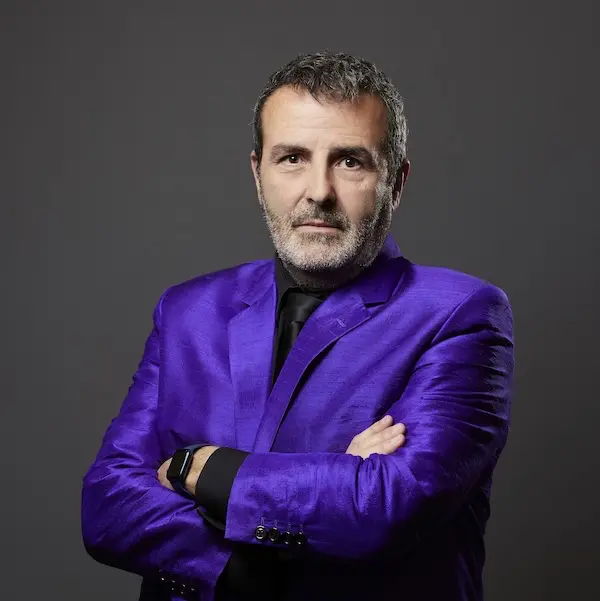
Jerome H. & M. Grossman Professor of Economics, Columbia University | Chief Economic Advisor, World Economic Forum | Creator of the Global Competitiveness Index
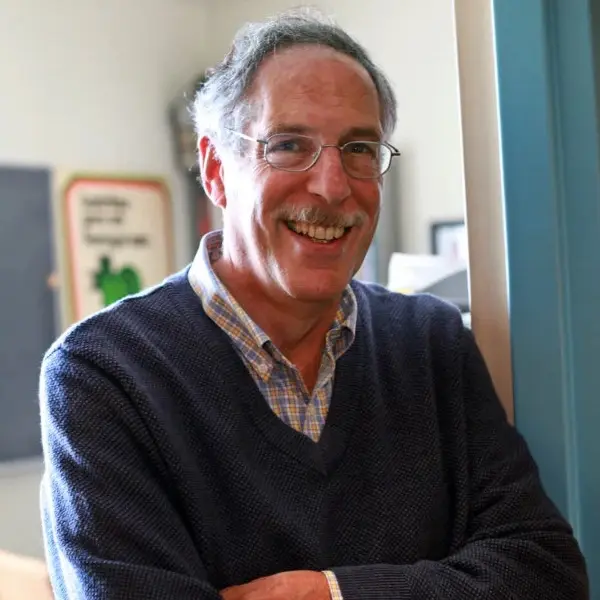
2010 Nobel Laureate in Economics | Institute Professor Emeritus, MIT | Architect of Social Security Reform | Taxation & Labor Market Expert


© 2026 Aurum Speakers Bureau. All Rights Reserved

| Basic Data Protection Information | |
|---|---|
| Data controller | AURUM SPEAKERS BUREAU S.L. |
| Address | Parc Audiovisual de Catalunya 1, Oficina S11, 08225 Terrassa, Spain |
| Purposes | We will use your data to respond to your requests and deliver our services to you. |
| Marketing | We will only send you marketing correspondence if you have given your prior consent, which you can do by ticking the box for that purpose. |
| Lawful basis | We will only process your data if you have given your prior consent, which you can do by ticking the box for that purpose. |
| Recipients | Generally, only our members of staff who have been duly authorised may access the data that you have provided. |
| Your Rights | You have the right to know what information we hold about you, to rectify it and to erase it, as explained in the additional information available on our website. |
| Additional Information | For more information, please see our "PRIVACY POLICY". |